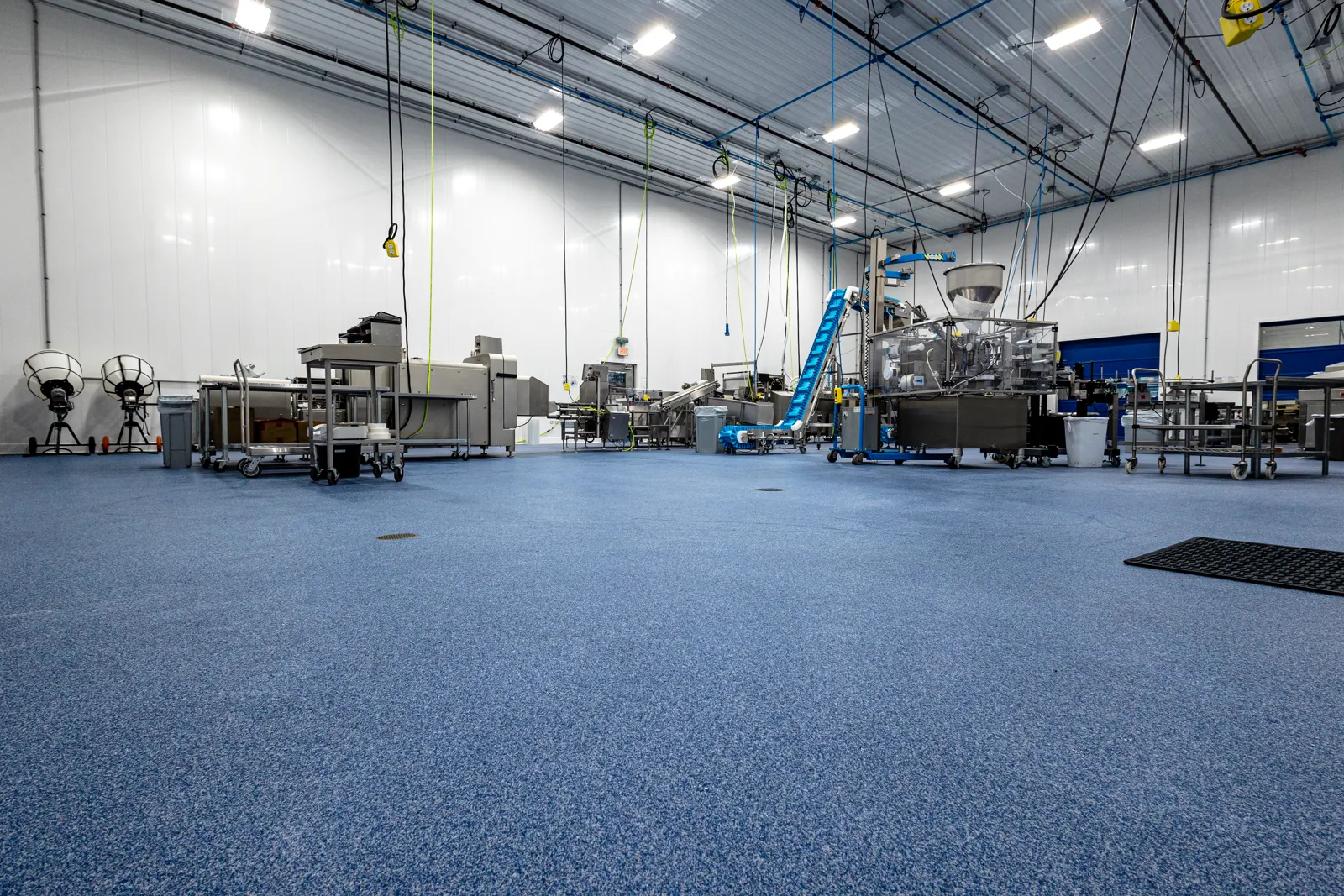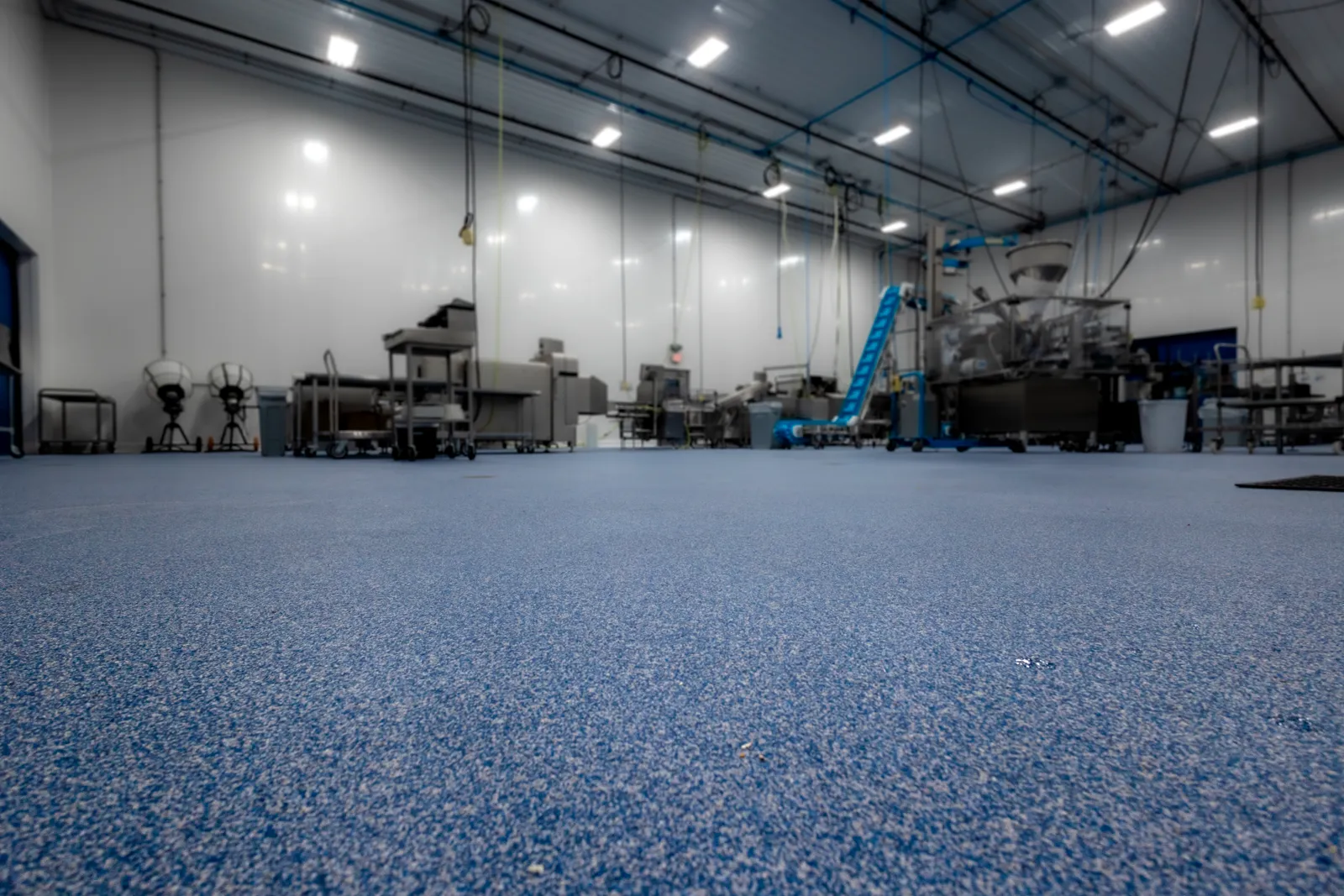
Industrial spaces don’t get a “second chance” floor.
Between forklifts, pallet jacks, dropped parts, chemical exposure, washdowns, and nonstop foot traffic, an industrial slab has to perform every day—safely and reliably. If the floor dusts, cracks, gets slick, or stains easily, it doesn’t just look rough. It slows production, creates safety issues, and increases maintenance costs.
At Creative Coatings LLC (based in Cyrus, MN), we help facilities choose industrial floor coatings that are built for real-world abuse—without overcomplicating the process.
What makes industrial flooring different?
Industrial floors face a combination of stressors that most residential or light-commercial floors never see:
- Heavy rolling loads: forklifts, scissor lifts, carts, and pallet jacks
- Point impacts: dropped tools, parts, and pallets
- Chemical exposure: oils, fuel, solvents, coolants, cleaners, salts
- Abrasion: constant grit and wear that can grind down bare concrete
- Moisture & washdowns: water intrusion, steam, or frequent cleaning
- Temperature swings: especially common in Minnesota facilities with dock doors and unheated zones
- Safety requirements: slip resistance, line striping, clear walkways, and visibility
Bare concrete is strong in compression, but it’s also porous and prone to dusting, staining, and surface wear. That’s why most industrial facilities move toward a purpose-built industrial epoxy flooring system or a hybrid coating system.
Common industrial flooring problems (and what causes them)
If you’re troubleshooting an existing floor, these are the most common “why is this happening?” issues we see:
Concrete dusting and constant sweeping
Uncoated or worn concrete can shed fine dust as traffic breaks down the surface paste. A coating system seals the concrete and reduces ongoing dust.
Chipping, spalling, and surface failure
This can come from impact, weak concrete, freeze/thaw near doors, moisture pressure below the slab, or poor prep on a previous coating.
Stains that never fully clean up
Oil, coolant, rust, and chemicals soak into porous concrete. Even after degreasing, the stain often remains—and can keep wicking back up.
Slippery floors
Smooth concrete (or an incorrect topcoat) can get slick when wet or oily. The right system includes texture options to improve traction.
Tire marks and wear lanes
Forklift traffic concentrates wear in specific paths. Not all coatings handle hot tires, abrasion, and turning loads the same way.
What to look for in an industrial floor coating
A quality industrial floor isn’t just “epoxy.” It’s a system designed around your facility’s demands.
Here’s what matters most:
- Adhesion & proper surface prep: prep is the foundation; without it, even great products fail
- Compressive and impact durability: to handle dropped items and heavy equipment
- Abrasion resistance: to fight grinding wear from traffic and grit
- Chemical resistance: matched to what’s actually on your floor (oils, acids, solvents, etc.)
- Slip resistance: especially in wet areas or where oils are present
- Cleanability: smooth, sealed surfaces cut cleaning time and help you maintain a professional space
- Downtime requirements: some systems cure faster than others
Industrial flooring solutions that work (and where they fit)
Below are the most common industrial floor coating options, with practical guidance on where each performs best.
1) Industrial epoxy flooring (high-build epoxy systems)
Best for: warehouses, manufacturing areas, mechanical rooms, storage, many general industrial spaces
Epoxy is a proven workhorse for industrial floors. It builds thickness, bonds well when prepped correctly, and provides excellent protection from abrasion and many chemicals.
Why facilities choose epoxy:
- Strong, durable coating for daily traffic
- Helps stop concrete dusting
- Easier cleanup and improved appearance
- Can incorporate colored quartz, flakes, or safety striping
Keep in mind: Epoxy cure times can be longer than faster-turnaround coatings, and UV exposure can yellow some epoxies (more common near windows and large doors).
2) Urethane cement (for thermal shock and harsh processing)
Best for: food and beverage areas, commercial kitchens, processing plants, washdown zones
Urethane cement is designed for extreme conditions—temperature swings, hot washdowns, and aggressive cleaning.
Why it’s used:
- Handles heat, steam, and thermal shock better than many standard coatings
- High chemical resistance in demanding environments
- Built for constant washdown
3) Polyurea / polyaspartic topcoats (fast cure, tough wear layer)
Best for: facilities that need faster return-to-service, high wear resistance, and a durable top layer
These coatings are often used as part of a system—especially as a protective topcoat over epoxy.
Why facilities like them:
- Faster cure times (helpful when downtime is expensive)
- Strong wear resistance and good stain resistance
- Better UV stability than many traditional epoxies
4) Anti-slip and safety-enhanced systems
Best for: loading docks, ramps, wash areas, entry zones, high-risk walkways
Slip resistance isn’t one-size-fits-all. The right texture depends on whether you’re dealing with water, oils, fine dust, or frequent cleaning.
Options can include:
- Broadcast media for texture
- Matte or grip topcoats
- Dedicated traction zones (instead of texturing the entire floor)
5) Line striping, floor marking, and traffic flow upgrades
Best for: warehouses and production spaces focused on safety and organization
A floor can actively improve operations:
- Forklift lanes and pedestrian walkways
- Staging and inventory zones
- Hazard markings and egress paths
When applied over a sealed, coated surface, striping tends to last longer and look sharper.
Matching the coating to your environment: a quick checklist
Before you choose an industrial floor coating, answer these questions:
- What traffic is on the floor? (forklifts, steel wheels, tracked equipment)
- What chemicals hit the slab? (cleaners, oils, solvents, acids)
- Is the floor wet or washed down? (daily, weekly, occasionally)
- Is temperature swing a factor? (dock doors, freezers, hot equipment)
- How much downtime can you afford? (overnight, weekend, multi-day)
- Do you need slip resistance? (where and how aggressive)
- What condition is the concrete in? (cracking, spalling, moisture issues)
This is where a site visit and a straightforward recommendation can save you a lot of money. The “best” system is the one that fits your floor and your operation.
The step that matters most: concrete prep
Industrial coatings succeed or fail based on prep.
A professional install typically includes:
- Mechanical grinding or shot blasting (not acid etching)
- Crack and joint repair (as appropriate for the facility)
- Moisture evaluation when needed (especially for older slabs)
- Careful detailing at edges, drains, and transitions
If a floor coating is peeling, bubbling, or chipping early, the cause is often insufficient surface profile or contamination—not just the coating itself.
Maintenance tips to make an industrial floor last longer
A good coating reduces maintenance, but it doesn’t eliminate it. A few simple habits protect your investment:
- Keep grit under control: grit acts like sandpaper under tires
- Use the right cleaner: harsh or incompatible chemicals can dull the finish over time
- Address spills fast: especially oils and aggressive chemicals
- Use pads/tires that fit your environment: some tire compounds mark more than others
- Schedule periodic inspections: small repairs are easier than full replacements
Why specialized coatings are worth it in industrial spaces
When industrial floors are done right, you’ll notice:
- Better safety: improved traction and clearer traffic flow
- Less downtime: fewer floor failures and easier cleaning
- Longer service life: protection against abrasion, impact, and chemicals
- A more professional facility: customers, auditors, and employees see the difference
We’re a family-owned company, and we don’t believe in overselling. We’ll tell you what you truly need—and what you don’t—based on how your space operates.
FAQs about industrial floor coatings
What’s the best industrial flooring for a warehouse?
For many warehouses, industrial epoxy flooring (often with a durable topcoat) is a strong fit because it handles traffic, reduces dusting, and improves cleanability. Exact recommendations depend on forklift traffic, turning lanes, and chemical exposure.
Do epoxy floors hold up to forklifts?
Yes—when the concrete is properly prepped and the system is designed for rolling load and abrasion. Thickness, topcoat choice, and cure time all matter.
Are industrial floor coatings chemical resistant?
Many are, but “chemical resistant” isn’t universal. The right system depends on what chemicals are present and how long they sit on the floor.
How long does an industrial floor coating last?
Service life depends on traffic, cleaning habits, chemical exposure, and the system installed. In many facilities, a properly installed system can last for years with routine care and periodic touch-ups in high-wear lanes.
Need help choosing the right industrial floor coating in West Central Minnesota?
If you’re in Cyrus, Alexandria, Willmar, Morris, or the surrounding area, Creative Coatings LLC can help you compare options, plan around downtime, and build a flooring system that fits your operation.
If you tell us what happens on your floor—traffic, chemicals, cleaning, and schedule—we’ll give you a clear recommendation you can trust.